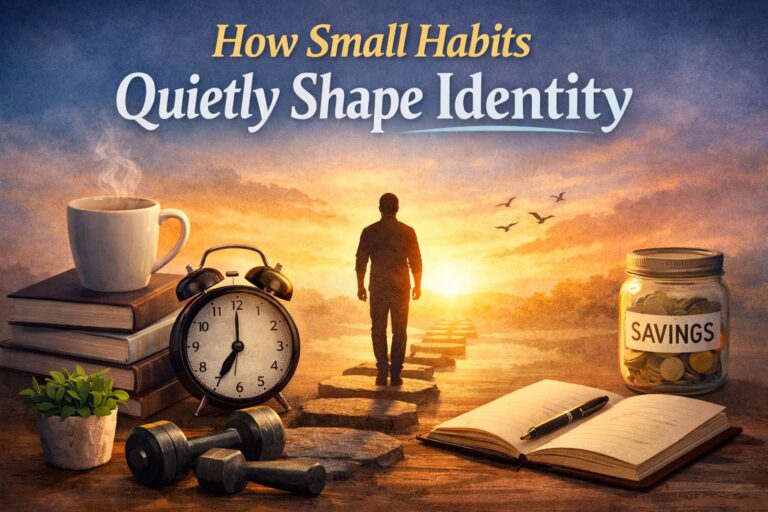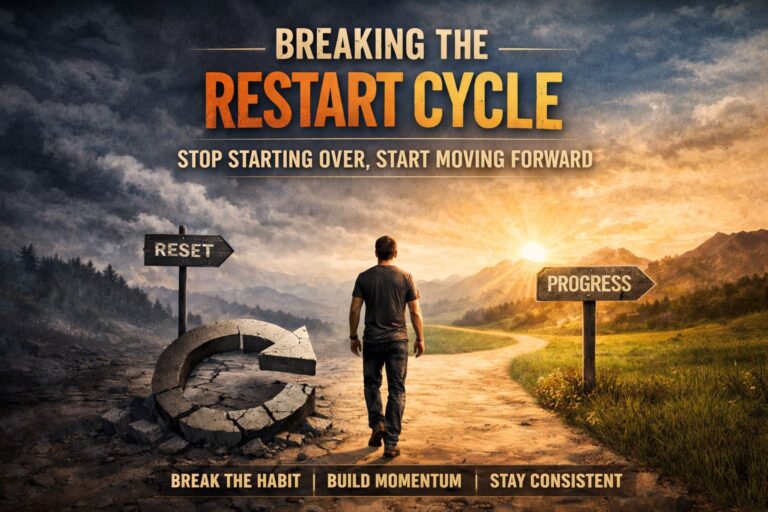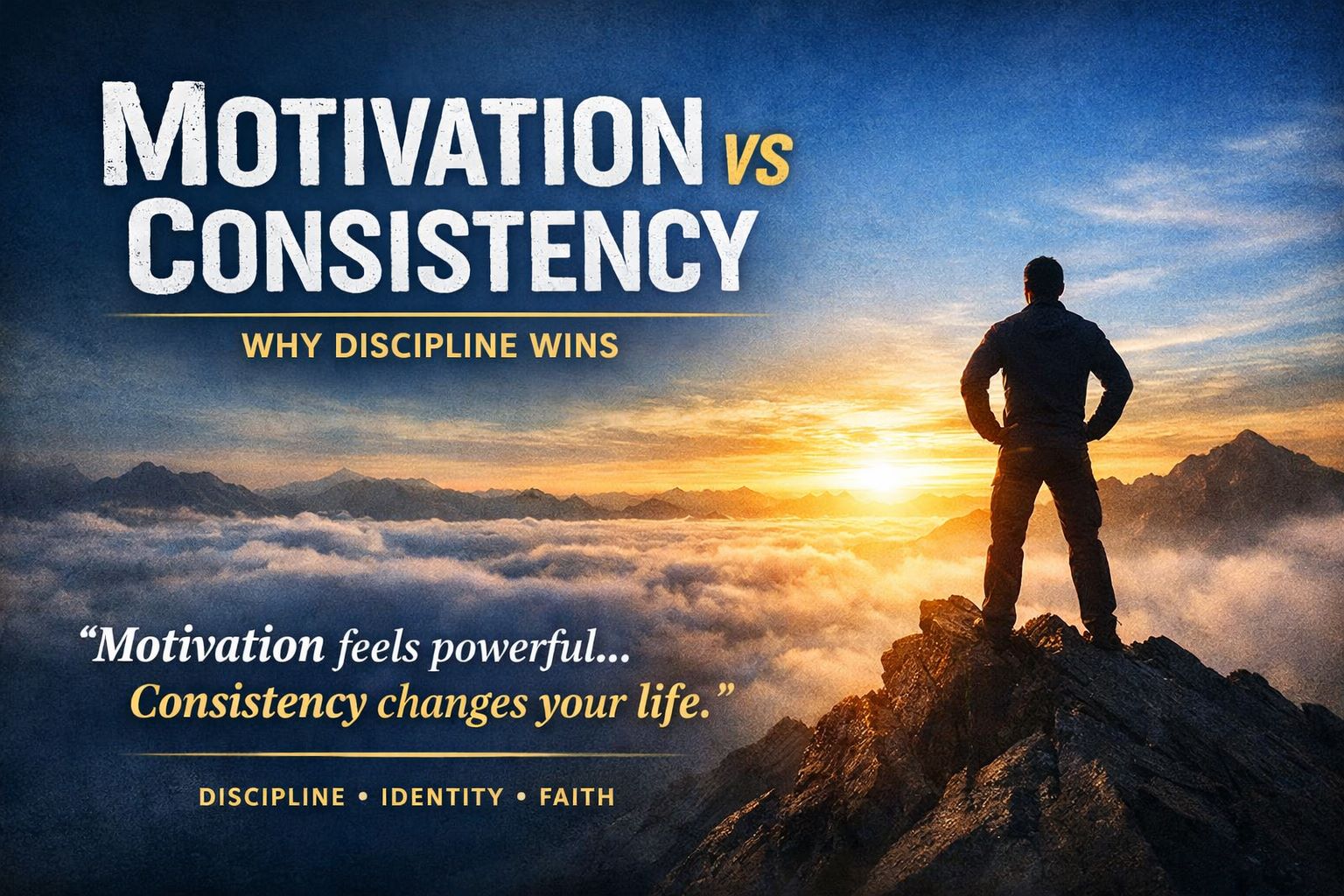
Motivation Feels Powerful… So Why Does Consistency Change Your Life More?

(Motivation vs Consistency — Discipline, Identity & Faith in Daily Growth)
Motivation vs Consistency
If you keep searching for motivation vs consistency answers, you might be asking the wrong question.
The real issue isn’t whether motivation matters — it’s why consistency quietly determines who you become.
You don’t struggle because you lack desire.
You struggle because you’re waiting for a feeling that was never meant to lead you.
There are days when motivation feels strong — clear, emotional, energizing. You feel like you can finally become the version of yourself you imagine. You promise this time you won’t stop.
Then the feeling fades.
And suddenly the same routines feel heavier, slower, less exciting. Not because you lost purpose — but because motivation was never designed to carry the weight of long-term growth.
The real tension isn’t between success and failure. It’s between who you are when you feel inspired and who you are when everything feels ordinary.
The Hidden Problem Most People Ignore
Motivation is easy to love because it feels like progress.
It gives you emotional momentum. It makes you believe change is happening fast. But motivation is temporary by nature. It rises with excitement and disappears when reality becomes repetitive.
So when motivation fades, many people assume something is wrong — with the plan, the season, or even themselves.
But the truth is deeper.
The real issue isn’t lack of effort. It’s an identity that still believes growth should always feel exciting.
And when growth becomes quiet, slow, and unseen, resistance begins to grow inside you.
Why Motivation Alone Keeps You Stuck
You’ve probably noticed this cycle before:
You start strong.
You feel focused.
You create momentum.
Then life becomes normal again — and suddenly consistency feels harder than starting.
That’s because motivation depends on emotion, while consistency depends on decision.
Motivation asks, “Do I feel ready today?”
Consistency asks, “Who am I choosing to be today?”
When emotion leads, discipline waits. And when discipline waits, progress becomes inconsistent.
The Identity Shift Most People Avoid
You don’t wake up planning to break your habits.
But deep inside, there’s often a belief that progress should feel rewarding all the time. When it doesn’t, your mind searches for something new — a new strategy, a new routine, a new spark of excitement.
This isn’t laziness. It’s identity resistance.
Part of you still wants transformation without the quiet repetition that creates it.
Consistency challenges your ego because it removes emotional drama. It replaces excitement with structure. And structure forces you to confront yourself honestly.
Powerful Mindset Shifts That Change Everything
1. Motivation Starts the Journey — Consistency Shapes the Person
Motivation helps you begin. But consistency reveals your character.
Anyone can act when energy is high. Growth happens when you continue even when the feeling disappears.
You stop asking if the moment feels right. You start acting from who you are becoming.
2. Comfort Often Disguises Itself as Reflection
Sometimes you tell yourself you’re waiting for clarity. In reality, you might be protecting comfort.
Consistency feels repetitive. And repetition challenges the part of you that wants constant emotional reward.
Growth doesn’t always feel powerful. Often, it feels simple and quiet.
3. Ego Prefers Motivation Because It Avoids Accountability
When you rely on motivation, you can always blame circumstances.
Consistency removes that escape.
It shows you your real patterns — your habits, your distractions, your internal resistance. That honesty can feel confronting, but it also builds real self-leadership.
4. Discipline Is Not Harsh — It’s Honest Alignment
Discipline doesn’t mean forcing yourself without rest. It means choosing alignment daily.
It’s the quiet decision to keep promises privately.
Consistency builds trust between who you are and who you say you want to become.
5. Faith Redefines How You Measure Progress
When faith becomes part of your growth, you stop measuring only visible outcomes.
You begin to understand that showing up daily is an act of belief — belief that unseen progress is still progress.
Faith doesn’t remove challenges. It gives meaning to the process.
Instead of asking why things feel slow, you begin asking what is being shaped within you.
Practical Actions to Build Consistency Without Waiting for Motivation
You don’t need more inspiration. You need structure that reduces internal negotiation.
Here are simple ways to begin:
- Start when you feel neutral. You don’t need excitement to take action.
- Create small non-negotiables. Write one paragraph, train ten minutes, read one page.
- Track identity, not perfection. Ask yourself if you showed up — not if everything was flawless.
- Reduce decisions. Choose your time, task, and duration in advance.
- Protect quiet routines. Growth happens long before recognition appears.
Consistency grows when you remove emotional bargaining from your day.
When Consistency Becomes Your Identity
There comes a moment when discipline stops feeling forced.
You wake up, take action, and move forward — not because you feel inspired, but because it has become part of who you are.
That’s when identity shifts.
Motivation once felt like power.
Consistency becomes stability.
And maybe the deepest question you can ask yourself is this:
Are you chasing the feeling of growth — or are you becoming the person who grows even when nothing feels extraordinary?
Discover more from Mutembei William
Subscribe to get the latest posts sent to your email.