How Small Habits Quietly Shape Identity and Change Your Life

Most people think identity is built in dramatic moments. They believe change happens when pain becomes unbearable, motivation becomes intense, or life forces a breakthrough. They wait for a new year, a crisis, a mentor, or a burst of inspiration. But real identity is rarely formed in one loud moment. It is shaped in quiet repetition, through small habits that seem too ordinary to matter.
A habit is never just an action. It is evidence. Every repeated behavior becomes a vote for the kind of person you are becoming. When you wake up on time, you are not only starting your day well. You are reinforcing the identity of someone who honors structure. When you keep avoiding hard tasks, you are not only wasting time. You are rehearsing the identity of someone who runs from discomfort. What you repeat, you become.
That quiet process determines character long before success appears.
Identity Is Built Through Repetition, Not Intention
Many people confuse desire with transformation. They say they want to be disciplined, focused, healthy, or confident, but their daily actions tell another story. Wanting a new identity is not the same as practicing one. You do not become reliable by admiring consistency. You become reliable by keeping your word in small moments.
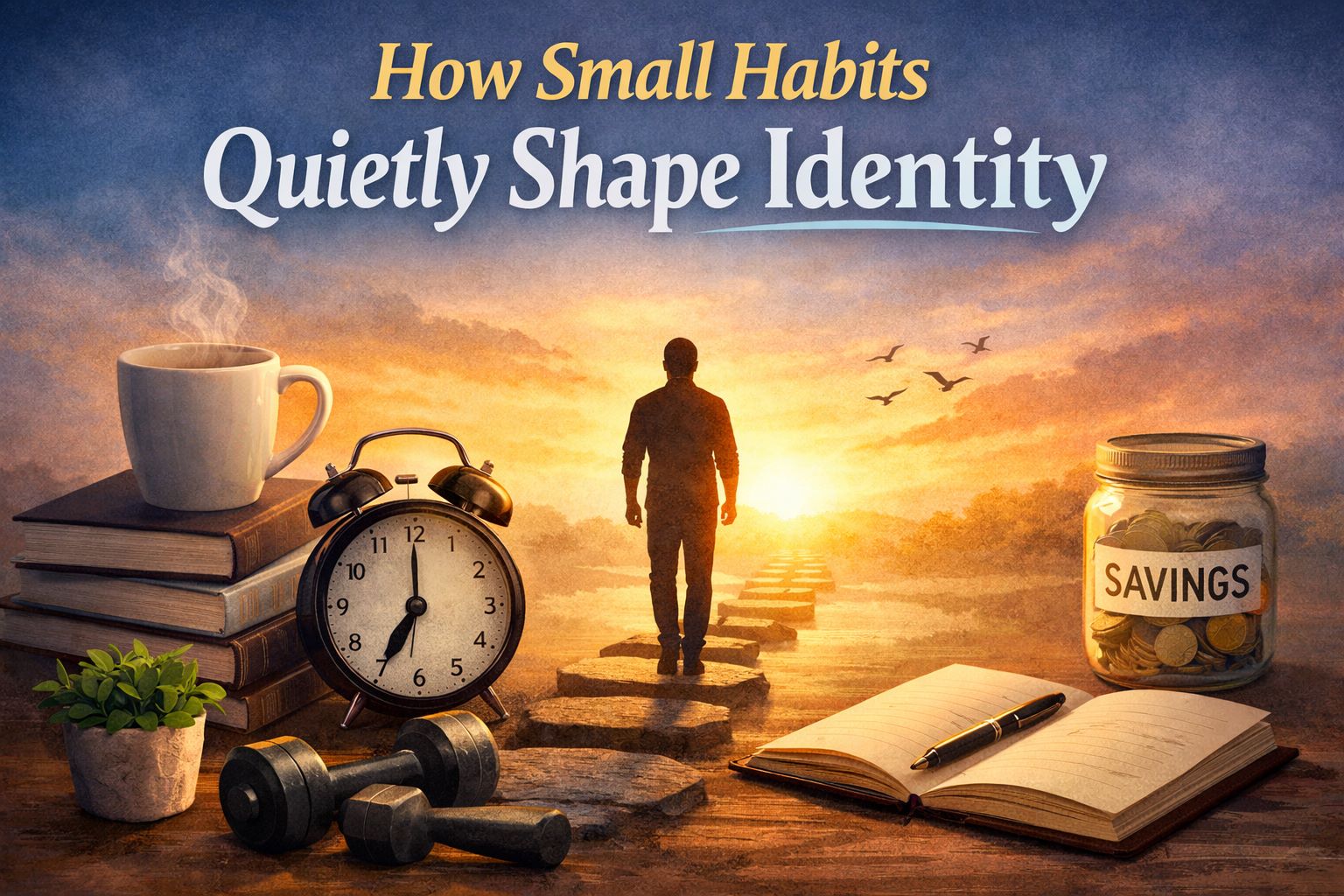
That is why tiny routines matter so much. Reading ten pages a day may not feel life changing, but it builds the identity of a learner. Saving a little money each week may not look impressive, but it forms the mindset of a steward. Cleaning your space every evening may seem basic, but it strengthens the identity of someone who values order.
Identity is not claimed first. It is practiced first. Before the world sees change, your habits are already shaping it in private. Long before anyone calls you disciplined, your routine has been training discipline behind the scenes. Long before people trust your leadership, your habits have either built integrity or weakened it.
Every Habit Teaches You Something About Yourself
Small habits do more than produce results. They shape self-perception. Every repeated action sends a message to your mind about who you are. When you follow through on simple commitments, you teach yourself that your word matters. When you keep breaking promises to yourself, you teach yourself that your intentions cannot be trusted.
This is why confidence and self-respect are deeply connected to habits. Confidence is not only built through big wins. It is built through repeated proof. Each time you do what you said you would do, even when you do not feel like it, you deposit trust into your identity. Each time you delay, excuse, or abandon your standards, you withdraw from that account.
The deepest damage of bad habits is not only the visible result. It is the invisible belief they create. A person who constantly procrastinates starts to believe they are lazy. A person who always reacts emotionally starts to believe they are unstable. A person who never finishes anything starts to believe they are not capable. Over time, repeated actions stop feeling like choices and start feeling like personality.
Why Small Habits Are Easy to Ignore but Dangerous to Neglect
People often ignore small habits because their effects seem harmless in the moment. One late morning does not ruin a life. One missed workout does not destroy health. One distracted afternoon does not erase potential. But repeated over time, these patterns quietly shape character.
A single compromise can become a mindset. A single excuse can become a lifestyle. A single act of avoidance can become a pattern of fear. This is how identity drifts. Not through one collapse, but through a hundred tiny choices that move you away from the person you meant to become.
The reverse is also true. One page read each day can grow into wisdom. One walk every morning can grow into discipline. One decision to pray, journal, budget, or plan can create internal stability. Small habits are powerful because they do not need applause to work. They shape who you are whether anyone notices or not.
Small Habits Either Strengthen or Fracture Self-Trust
At the center of identity is self-trust. Can you believe yourself when you make a commitment? Can you depend on your own standards when nobody is watching? Small habits answer those questions. They either strengthen your inner credibility or quietly weaken it. When you honor simple routines, you create psychological stability. You stop negotiating with every mood. You stop needing constant motivation. You begin to experience the peace that comes from alignment. On the other hand, when you repeatedly betray your own goals, you create internal friction. You feel frustrated, scattered, and disappointed, not because you lack potential, but because your habits are training you to distrust your own intentions.
The Identity Shift Begins in Ordinary Moments
Most transformation looks boring before it looks beautiful. It begins in unnoticed moments: getting up when the alarm rings, putting the phone away, drinking water instead of reaching for comfort, finishing one task before starting another, speaking calmly when irritated, or choosing preparation over excuses.
None of these moments feel dramatic, yet each one builds a different person. Small habits create internal order. They teach you to lead yourself before you try to lead anything else. They train patience, restraint, focus, and emotional control. They help your daily life match the future you say you want.
This is why the little things matter so much. The way you spend your mornings matters. The way you speak to yourself matters. The way you handle fatigue, temptation, frustration, money, and time matters. These are not side issues. These are identity-forming moments disguised as normal life.
Start Small, but Start With Seriousness
One reason many people fail is that they try to change everything at once. They build an extreme routine, depend on emotional energy, then quit when life becomes inconvenient. Sustainable change usually begins smaller than the ego prefers.
Start with one habit you can repeat consistently. Read five pages. Walk for ten minutes. Make your bed. Wake up when you said you would. Keep one promise a day. The action may look small, but the identity message is powerful. You are telling yourself, I am becoming someone who follows through.
Do not despise simple disciplines. Respect them. Protect them. Repeat them. Great character is not built through occasional intensity. It is built through steady alignment between values and action.
Conclusion: Your Habits Are Writing Your Future Self
Your identity is not mainly shaped by what you say you want. It is shaped by what you do repeatedly. Quietly, daily, and patiently, your habits are writing the story of who you are becoming.
If you want a stronger identity, stop waiting for a dramatic turning point. Build better evidence. Choose habits that support your values, your standards, and your future. Let your routine confirm your vision.
The little things you keep doing are becoming the person you keep becoming. Choose them carefully.
Ready to rebuild your identity from the inside out? Start with one small habit today, stay consistent, and let your daily choices become proof of the person you are meant to become.
Discover more from Mutembei William
Subscribe to get the latest posts sent to your email.