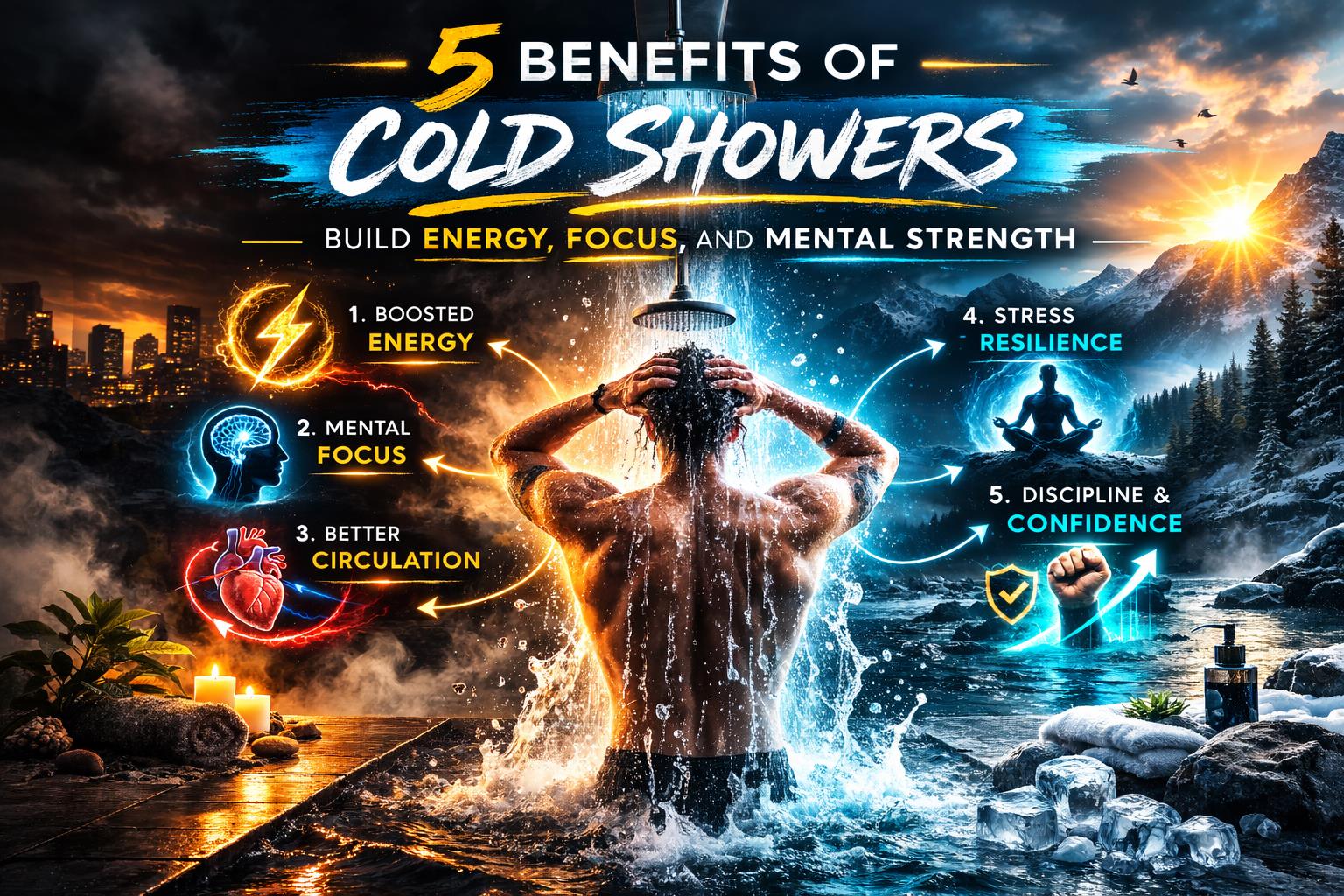
5 Benefits of Cold Showers That Quietly Build Energy, Focus, and Mental Strength

Most people hear about cold showers and immediately think about extreme discipline or discomfort.
But the real benefits of cold showers go deeper than proving toughness. This simple habit challenges your body, sharpens your mind, and teaches you how to stay calm under pressure.
Cold exposure isn’t about forcing yourself into suffering. It’s about training your nervous system to respond differently to stress — and that shift can quietly influence your daily habits, focus, and confidence.
Below are five powerful benefits of cold showers and why more people are adding them to their routines.
1. Increased Alertness and Mental Clarity
One of the most noticeable benefits of cold showers is how quickly they wake up your mind.
When cold water touches your skin, your breathing deepens and your body moves into a more alert state. This natural response increases awareness and helps reduce morning sluggishness.
Instead of relying only on caffeine, cold exposure activates your body’s own energy system. Many people report sharper focus and improved clarity shortly after finishing a cold rinse.
Over time, this can help you begin your day with intention rather than rushing into it half awake.
2. Stronger Emotional Discipline
Cold showers are not just physical — they’re deeply mental.
Standing under cold water requires you to stay present when your instinct tells you to step away. That small moment of resistance teaches your brain that discomfort doesn’t control your choices.
Practicing this daily builds emotional resilience. You learn to breathe through pressure instead of reacting impulsively.
This is one of the most overlooked cold shower benefits: the ability to train calmness in uncomfortable moments.
3. Improved Circulation and Physical Refreshment
Cold water temporarily tightens blood vessels near the surface of the skin. When you warm up afterward, circulation increases again.
This cycle can leave your body feeling refreshed and energized. Some people also notice reduced feelings of fatigue or heaviness after a cold rinse, especially after long hours of work or movement.
While cold showers are not a medical treatment, they can support overall wellness when practiced responsibly.
4. Better Recovery After Exercise
Many athletes use cold exposure as part of their recovery routine.
Cold water may help reduce the feeling of muscle soreness after physical activity by creating a mild anti-inflammatory response. Even a short cold rinse after a workout can feel grounding and refreshing.
You don’t need long or extreme exposure to feel benefits. Consistency matters more than intensity when building healthy habits.
5. A Daily Confidence and Discipline Builder
Perhaps the most powerful benefit of cold showers isn’t physical at all — it’s psychological.
Every time you choose to step into cold water, you reinforce an identity of someone who follows through despite discomfort. That small daily decision builds confidence quietly over time.
Confidence doesn’t always come from big achievements. Sometimes it grows from the habits you keep when nobody is watching.
Cold showers become less about temperature and more about the mindset you practice daily.
How to Start a Cold Shower Routine Safely
If you’re new to cold exposure, start gradually instead of jumping into extreme temperatures.
- Begin with your normal warm shower.
- Lower the temperature slightly for the last 10–20 seconds.
- Focus on slow, controlled breathing.
- Increase duration slowly over days or weeks if it feels comfortable.
Always listen to your body. If you feel unwell or overly stressed, return to warm water and try again another day.
The Takeaway
Cold showers won’t transform your life overnight.
But they can change how you respond to discomfort — and that mindset often carries into discipline, consistency, and personal growth. The benefits of cold showers aren’t just physical; they reshape how you approach challenges each day.
Sometimes the habits that look small from the outside are the ones quietly building strength on the inside.
Discover more from Mutembei William
Subscribe to get the latest posts sent to your email.